
Quick summary
- The hold is a state, not a weakness: the trauma bond is manufactured, therefore it can be undone.
- Liberation follows 4 stages: clarity, releasing guilt, detachment, rebuilding.
- Leaving is only half the road: emotional detachment is worked on afterwards too.
- Going back doesn't mean failing: most victims leave in several attempts.
- You don't escape a hold alone against everyone: the people around you and professional help are part of the plan.
If you've already tried to leave, you know that maddening paradox: you KNOW. You've understood the mechanism, you've read the articles, you can describe how he works better than a manual, and yet, you're still here. Or you left, then came back. Perhaps several times.
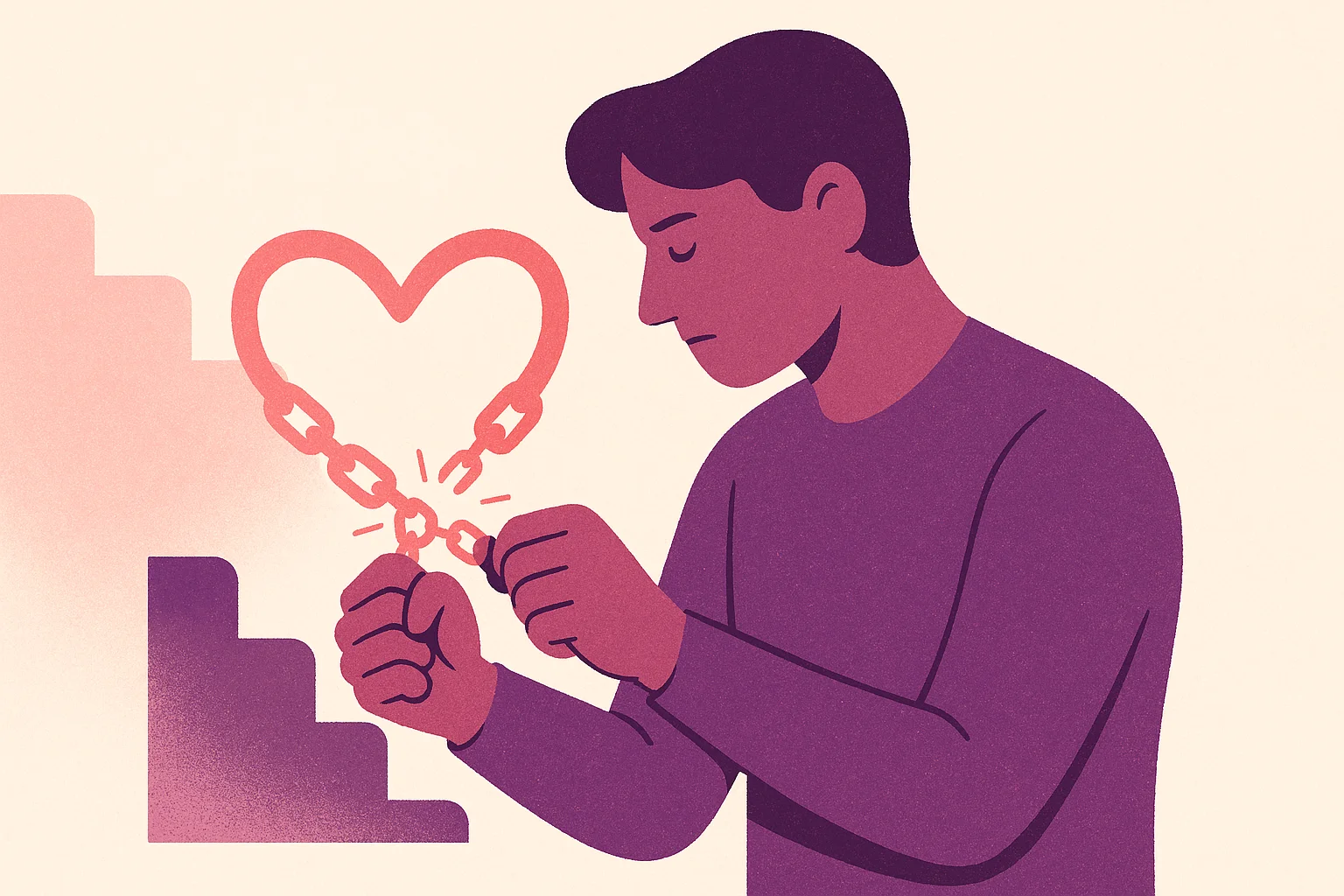
So let's put an end right away to the worst interpretation, the one gnawing at you: no, this isn't a lack of willpower, and no, you're not «too weak». A coercive hold isn't an opinion you abandon: it's a state, manufactured chemically and psychologically, and it gets dismantled in a certain order. It doesn't come down to one burst of willpower, it comes apart stage by stage.
Here is that path, in four stages, with the mistakes that send people back. Wherever you are on the route, you'll be able to place yourself.
Why it's so hard: the trauma bond
Let's start by rehabilitating you in your own eyes, because everything follows from that.
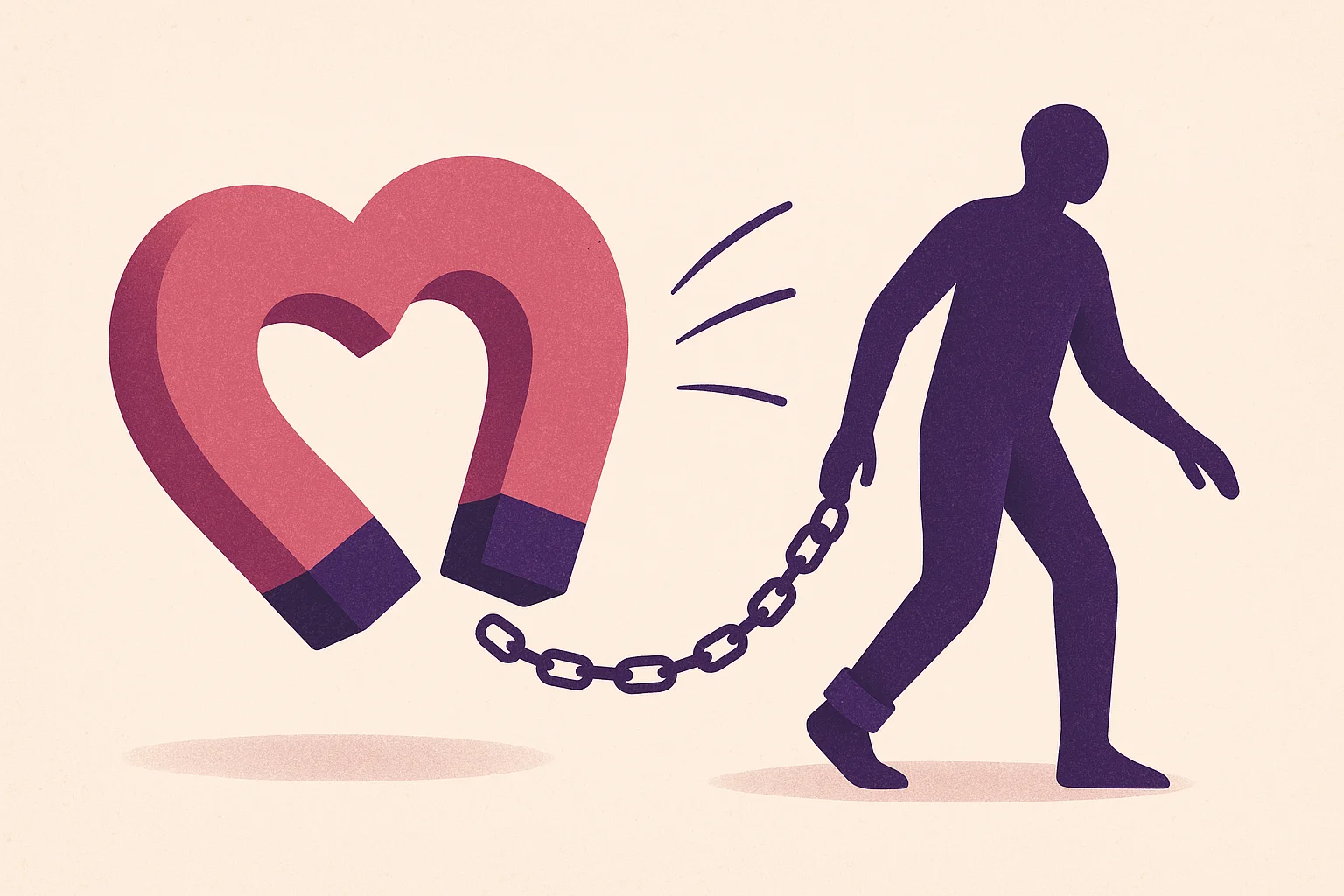
What attaches you to him has a name: the trauma bond, and it's pure mechanics. When the same person is the source of your suffering AND of your comfort, your brain manufactures an attachment of abnormal power. The alternation does everything: the punishment creates the craving, the reward creates the relief, and relief, repeated in fear, imprints harder than any quiet happiness. It's the same circuit as addiction, literally.
That's why «he's hurting you, leave» doesn't work: the hurt is PART of the attachment system. That's why you feel a physical craving away from him, even while you're doing better. And that's why your difficulty in leaving says nothing about your worth: it measures the power of the device, that's all. That device is the whole functioning of the narcissist in a relationship. Here, we deal with getting out of it.
| The stage | What's at play |
|---|---|
| 1. Clarity | Putting the right word on what you're living, without taking it back the next day |
| 2. Releasing guilt | Stopping the search for your share of responsibility in a system designed for exactly that |
| 3. Detachment | Leaving, and above all holding the distance in the weeks that follow |
| 4. Rebuilding | Learning to trust yourself again, the longest of the four |
Stage 1: clarity (naming what's happening)
Liberation always starts the same way: with a word placed on the fog. An article that describes your life exactly, a friend who says «this isn't normal», a test whose result shakes you. That moment when the chaos becomes a SYSTEM, with a name and rules.
At this stage your job isn't to leave, it's to document. Note the facts, with dates: the scenes, the sentences, the cycles. Two reasons for that. First, the hold attacks your memory, doubt will come back, and your notes will be your anchor: «it's written, it's dated, I'm not making it up». Second, reading your own notes across a month makes the pattern appear, and a pattern can't be un-seen.
The classic mistake of stage 1: sharing your brand-new clarity with him. «I've worked out how you operate!» Don't do that. You'd simply be signalling him to adjust it. Your clarity is an exit tool, not an argument in a row.
Stage 2: releasing guilt (giving back what isn't yours)
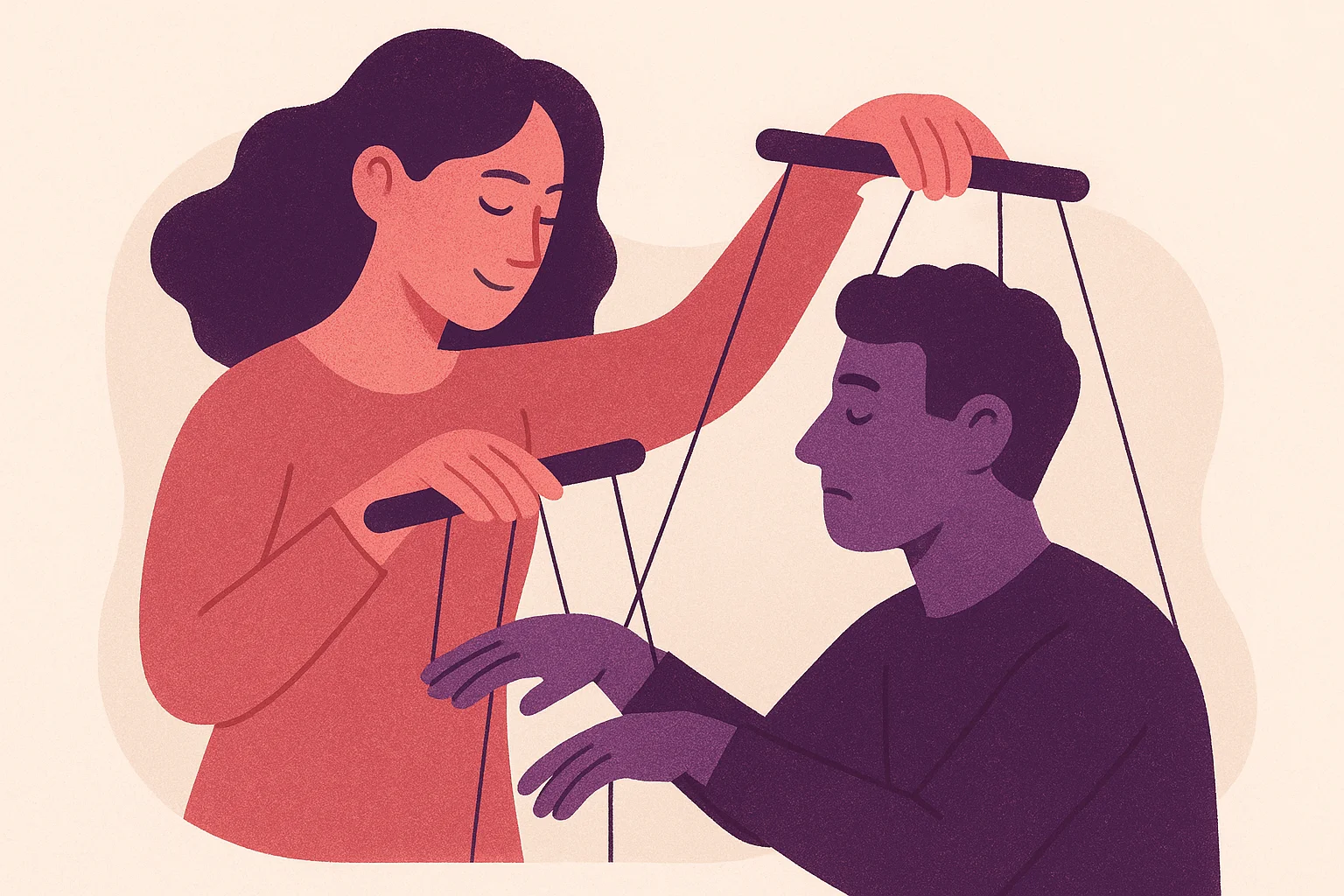
The hold rests on an inversion: you carry HIS faults. His anger is your insolence. His coldness is your demands. His lapses are your inadequacy. Months or years of that regime, and guilt has become your inner climate.
Stage 2 is the great sorting: giving back to each what belongs to them. One concrete exercise helps enormously: take out your stage 1 notes, and for each scene ask a single question: «if my best friend told me this scene with the roles reversed, whose fault would I say it was?» The answer is always crystal clear when it isn't you. That's exactly why the exercise works.
It's also the stage where you have to look squarely at what, in you, gave the system its handhold, not to blame yourself, but to protect yourself. Often, an older emotional dependency, a fear of abandonment that predates him. That work is your life insurance for what comes next: the codependent and manipulator duo doesn't re-form in someone who has dismantled their share of the mechanism.
Stage 3: detachment (leaving, and staying gone)
This is the visible stage, the one people think is the whole story: the break-up, the departure, the no contact. Breaking up with a narcissist has its own rules, preparation included, so here, just the essentials from the point of view of the hold.
Remember two things. First: emotional detachment doesn't precede leaving, it follows it. Many people wait until they «feel nothing any more» to leave, but it happens the other way round. You leave still attached, and the detachment happens in the distance, like a withdrawal. If you wait until you no longer love him to move, you'll wait a long time: it's the distance that detoxifies, not the time spent beside him.
Second: the craving that follows leaving isn't a message. Your body will demand its dose, the memories will come back sorted (the good ones first, that's mechanical), and a voice will tell you that «maybe it wasn't so bad». That's the withdrawal talking. The waves last twenty minutes; reread your stage 1 notes, call your human anchor, and let it pass. They space out, I promise you.
Stage 4: rebuilding (becoming yourself again, better protected)
The physical exit is done, what remains is the inner one, because the hold leaves software installed: the reflex to apologise, doubt about your perceptions, permanent vigilance, difficulty trusting, starting with yourself.
Rebuilding rests on three projects. Rehabilitating your judgement: start deciding small things again without asking for opinions, and note that the world doesn't collapse, that's your perceptual confidence rebuilding muscle. Repopulating your life: the bonds, the activities, the territories the hold had dried up, in the exact spirit of the emotional rebuilding exercises, which apply here line for line. And treating what needs treating: support from a therapist specialising in psychological abuse or in trauma isn't a luxury after a coercive relationship, it's the standard. Some victims develop genuine post-traumatic symptoms, and those respond very well to treatment, provided you go.
A last word on the question that frightens people: «will I fall for the same type again?» No, not if you've done the stages. The manipulators' radar looks for precise handholds, and you're dismantling them one by one. Women who have escaped a hold and rebuilt themselves even become remarkably good at spotting calibrated charm from three kilometres away. Your story is going to turn into an alarm system, and he's the one who'll never have access to you again.
Place yourself on the path
A set of questions assesses where your relationship stands, and where you stand: clarity, guilt, attachment. The result tells you which stage to concentrate your energy on right now.
Take stock of where I amFree · No sign-up · Instant result
And if you're reading this article for someone else, a sister, a friend stuck inside it, here's the instruction manual in three lines: don't criticise the man (she'll defend him), don't issue ultimatums (she'll choose him), just stay there, constant, without judgement, and plant the right words, one at a time. Victims leave the day they're ready, but they leave TOWARDS the people who stayed. Be that place.
Read alsoBreaking up with a narcissist: what's coming, phase by phase