Quick summary
- The manipulator detects emotional dependency very fast: it's his favourite hunting ground.
- The matching is mechanical: one person's fear of losing becomes the other's control tool.
- This couple lasts precisely because it hurts: the punishment-reward cycle locks everything in.
- Working on your emotional dependency vaccinates you against manipulators. Literally.
- The question isn't «why did I meet him» but «why did I stay», and that one has an answer.
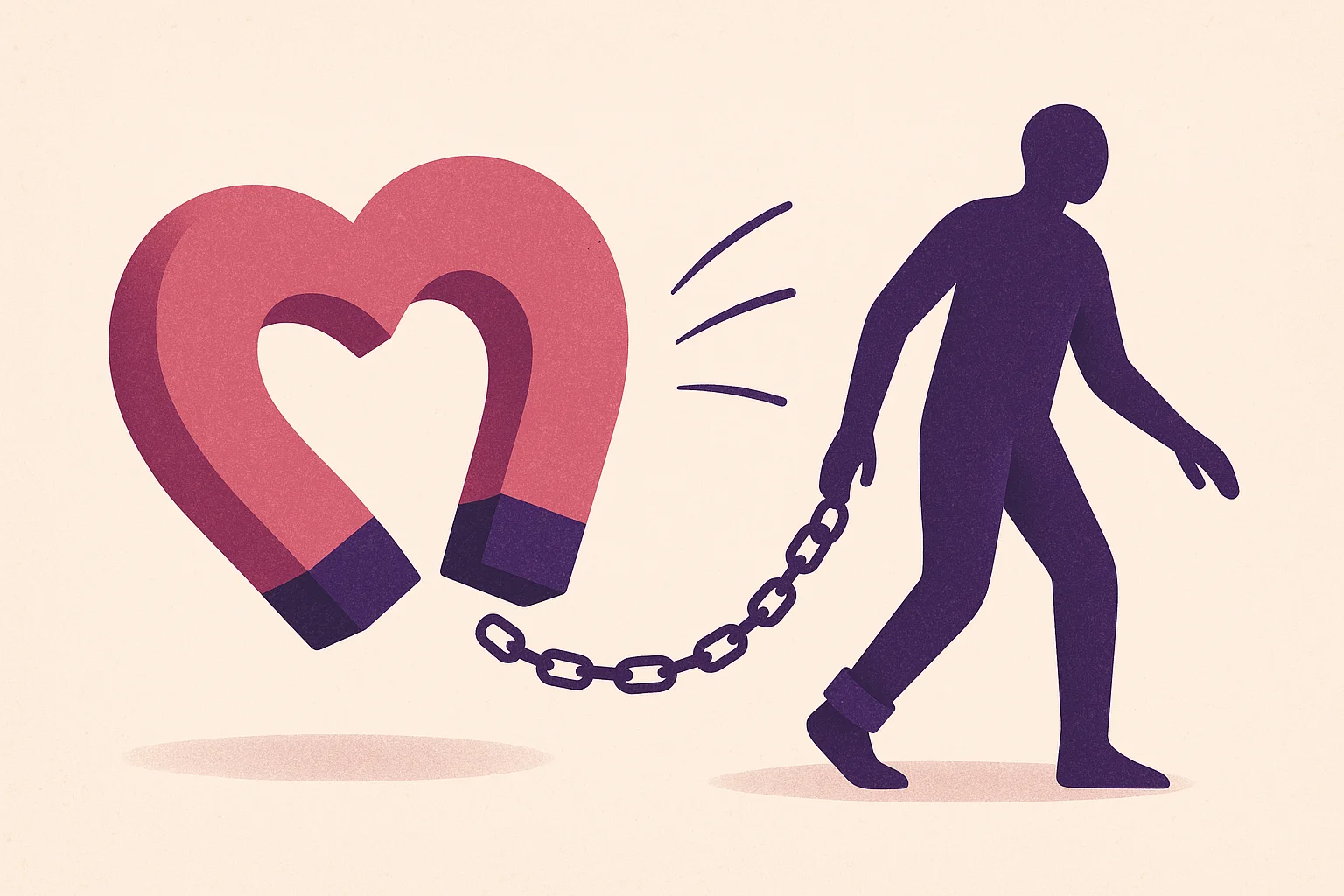
It's a question that comes up constantly among people leaving a coercive relationship: «why me?» Why him, again? Why this feeling of always landing on the same profile, as if a magnet were involved?
The answer hurts a little, but it frees you: it isn't bad luck, it's a matching. The manipulator is looking for exactly what the emotionally dependent person carries: the fear of losing. One needs to be loved in order to exist, the other needs to control in order to exist, and those two needs fit together with terrifying precision.
We're going to look this duo in the face: how the manipulator detects his «ideal prey», why this couple lasts so long despite the suffering, and how to break the mechanism.
How the manipulator detects emotional dependency
First you have to understand something counter-intuitive: the manipulator doesn't choose his partners at random, and he doesn't choose «weak» people either. He chooses people who have a lot to give, and fear that nobody will want it.
From the first meetings, certain signals attract him like a radar: immediate and total availability, eagerness to apologise, visible fear of being a nuisance, previous stories told with «I gave everything». Each of those signals says the same thing: here's someone who buys their place in relationships. And someone who buys their place will accept paying more and more for it.
His verification technique is fearsomely simple: he tests. A small withdrawal of affection, a silence, an unexplained coldness, and he watches. A secure person raises an eyebrow and gets on with a quiet evening. The emotionally dependent person panics, apologises, doubles their efforts. Test conclusive. The fear of losing the other person has just raised its hand without knowing it.
Why these two fit together so perfectly
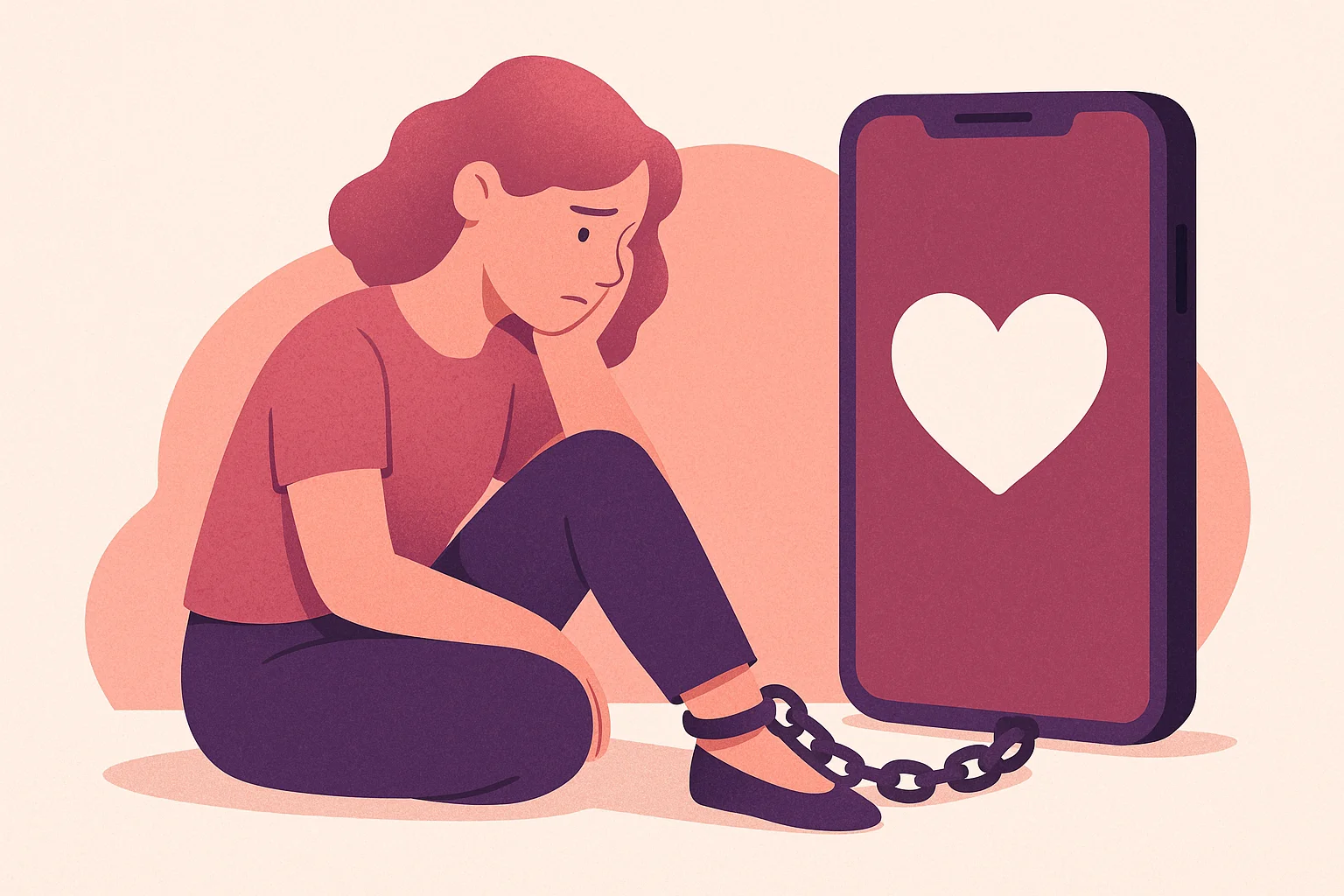
Look at the mechanics, they're almost chemical. The emotionally dependent person has a vital need for reassurance; the manipulator hands out and withdraws reassurance at will. The dependent one fears abandonment; the manipulator threatens to abandon, precisely dosed. The dependent one forgets themselves to deserve love; the manipulator banks the sacrifices, and asks for more.
Every need of one is a lever for the other. That's why this couple lasts so long: from the outside people ask «but why does she stay?», while from the inside the system feeds itself. The manipulator's punishment-reward cycle, the hot and cold, the phrases that induce guilt, produces exactly the deprivation that emotional dependency tries to fill, by attaching harder. The more it hurts, the tighter she holds. The tighter she holds, the tighter he squeezes.
And there's an extra cruelty: the idealisation phase at the start, the love bombing, is a perfect drug for an emotionally dependent person. Someone finally telling you «you're everything to me» when your whole system has been waiting for that since childhood? The trap doesn't even need to close. You run into it.
| What the codependent seeks | What the manipulator supplies | The trap |
|---|---|---|
| To be chosen, intensely, right away | Massive, accelerated seduction | Intensity passes for love |
| To be indispensable | Endless needs to be met | The more they give, the more useful they feel |
| To avoid conflict at all costs | Ground where there's never any contradiction | Boundaries never get set |
| An explanation for their unease | «You're the problem» | Doubt replaces anger |
«A codependent attracts a codependent»: true or false?
The formula gets around a lot, so let's clarify, because it's half true, and the false half is dangerous.
The true half
Insecurities attract each other, that's well documented. Two emotionally dependent people can form a fusional, suffocating couple, jealous on both sides, painful, but symmetrical. And there's another classic matching: the anxious with the avoidant, the one who pursues with the one who flees, each confirming the other's fears.
The false half
Believing that a codependent's partner is necessarily dependent too. The most destructive duo isn't symmetrical at all: it's codependent plus manipulator, and the two must not be confused. In a couple of two dependent people, both suffer and both can work on it. In the duo with a manipulator, only one suffers, and the other manages his capital.
Breaking the duo: where to start
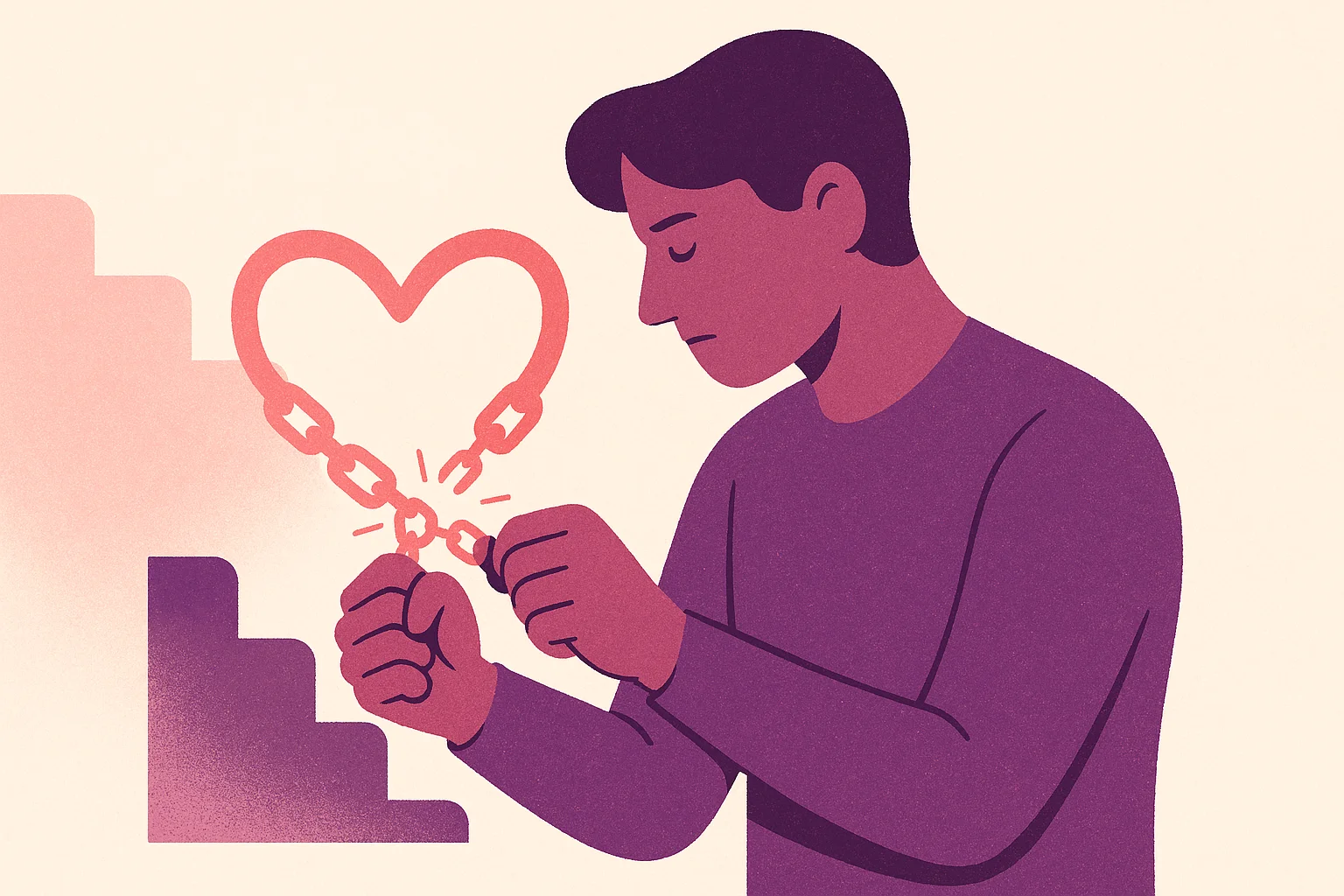
It all starts from one idea: you can't change the manipulator, but you can deactivate what attaches you to him. Emotional dependency is the system's fuel. Cut the fuel, and the system stalls.
Concretely, that means running two projects in parallel. The first: protecting yourself from HIM, and that escape from the hold follows four precise stages, from clarity to rebuilding. The second, less obvious and more powerful: working on YOUR dependency, because the exercises that dismantle it phase by phase deactivate, one by one, the levers he uses. The delay before answering the anxiety, the reactivated friendships, the practice «no», each of them is a piece of his system going up in smoke.
And that's where the bad news from the start becomes good news: if the matching is mechanical, then so is the dismantling. A person who has worked on their emotional dependency becomes profoundly uninteresting to a manipulator. The withdrawal tests no longer trigger panic. The punishing silences fall into the void. The threat of abandonment meets an «if that's what you want». The radar moves on to the next one. That's the vaccine.
Where to start? By measuring
Before breaking the duo, you need to know which of the two projects is more urgent for you. A set of questions assesses your share of emotional dependency, situation by situation, and shows you your starting point.
Measure my share of the duoFree · No sign-up · Instant result
One last thing about the «why me» from the start. You have the real answer now: not because you're weak, but because you carried a detectable fear, and a predator of fear came past. So the shame can change sides, and you can make this story the trigger for the work that will protect you for life. Many people who've come out of this duo say the same thing, years later: «it's the worst thing that ever happened to me, and it's the thing that built me most». You'll get there too.
Read alsoHow to overcome emotional dependency: 12 concrete exercises, phase by phase