

Quick summary
- Breaking up and getting back together is very common: almost two in three American college students have been through it.
- Lingering feelings are the reason people give most often for going back.
- On average, couples who keep splitting and reuniting are less satisfied, with more doubts and more fights.
- The back-and-forth also goes with more anxiety and depressive symptoms, especially when the cycles are frequent.
- Another try has better chances when you talk openly about what made the previous ones fail, and about what's changing.
You broke up, got back together, then broke up again. Maybe this is your second breakup, or your fourth, and the question is back: do we try again, one more time?
Couples who split up and get back together have a name among researchers: on-again, off-again relationships. They're much more common than people think, and they can work, but rarely by doing the same thing again. Here's what studies say about this back-and-forth, and how to tell whether another try has a chance.
Breaking up and getting back together is common
If you feel like you're the only ones going through this, you're far from it. Researchers who study these couples find them at every age, among college students as well as married couples.
The back-and-forth in numbers
- 2 in 3American college students surveyed in 2009 had been in an on-again, off-again relationship
- 44%of 17- to 24-year-olds in a relationship over the past two years had already gotten back with an ex
- 1/3of unmarried couples living together (slightly more, in fact) had already broken up and reunited
- 1 in 5married couples were in the same situation
So a second breakup is nothing unusual. What matters is what happens when the back-and-forth becomes a habit.
Why we get back together, again and again
When you ask the people involved, the most common reason is simple: the feelings never left. A 2011 study of on-again, off-again couples showed this clearly, and other reasons add to it, like the comfort of what you know or other dates that disappoint.
There's also what happens right after a breakup. Partners in these couples are often less sure it's over than people who split for good: the door stays ajar, and each one wonders whether the other will come back. The fear of being single pushes the same way: on days when it's strong, people long for their ex more and try harder to win them back.
None of this is shameful. But several of these reasons are mostly about missing someone, and that feeling also eases with time, without necessarily going back into the same story.
Read alsoWas my ex the one? The questions to ask yourselfWhat the back-and-forth does to a couple
Studies almost all point the same way. In 2009, a team at the University of Texas compared on-again, off-again couples with others: more fights, and more doubts about the future. In 2014, a study of more than a thousand couples found less satisfaction and more uncertainty among those who had already broken up and reunited, in married couples as well as those living together.
Mental health takes a hit too. A team at the University of Missouri surveyed 545 people in relationships: the more breakups and reunions they'd been through, the more symptoms of anxiety and depression they had. Following them for fifteen months, the same team found that those who cycled the most saw their distress rise the most.
These are averages, and they don't say breakups cause all this: a couple that's struggling breaks up more often, too. But they show that staying in this cycle wears you down, even when you love each other.
What can make another try work
It sometimes works. In the work of René Dailey, a University of Texas researcher who has studied these couples for years, the ones who do best have something in common: they talk openly about getting back together, about what made the previous tries fail and what's going to change. Getting back together "just like that", one evening, without saying anything, usually brings the same problems back.
Before trying again, look at:
- The reason for each breakup: if it's always the same one (jealousy, money or wanting kids, for example), there's a good chance it will come back.
- What has changed since: not a promise, something you can see, like a move or couples therapy that has started.
- Who comes back to whom: if it's always the same person leaving and the other one waiting, the imbalance is likely to stay.
- How you feel between breakups: missing them so much it hurts, or relief? If it's mostly relief, take it seriously.
They broke up with you again: what now?
When the breakup comes from them, for the second or third time, there are usually two reflexes: begging, or waiting for the next comeback. Both keep you in the loop.
- Don't decide anything in the first few days: neither "it's over forever" nor "I'll do anything to get them back". Anger and longing are too loud.
- Cut contact for a real while: no texts, no "just wanted to see how you're doing". It's the only way to know how you feel when they're not around.
- Look at the pattern: who leaves, for what reason, and how they come back. If each breakup looks exactly like the previous ones, the next one is likely to look like them too.
- Listen to the people close to you: if they no longer believe in this relationship, that's worth hearing. A study that followed about a hundred couples for two years found that support from friends and family goes with a better-quality relationship.
Getting your ex back after a second breakup: a good idea?
You can't make someone come back. You can only leave them room to come back, if they want to. Making them jealous or playing it cool may work for a while, but it usually brings back the same story, with the same ending.
If you do want to try again, do it differently: a real conversation before getting back together, about what broke things the previous times and about what each of you is concretely changing. A couples counselor can help you lay all this out.
And if, reading all this, you realize you're mostly tired of the back-and-forth, listen to yourself: leaving for good is also a decision you're allowed to make.
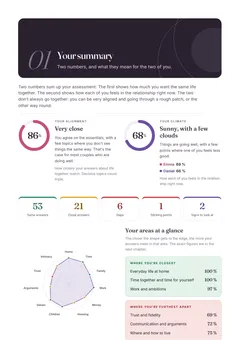
Relationship assessment -20% right now
The complete assessment of your relationship
100 specific questions on money, children, where to live, fidelity... You answer at the same time, each on your own phone and without seeing the other's answers, and you get a full report that compares the answers, topic by topic.
- 100 questions together, each on your own phone
- Built on research in couple psychology
- A full PDF report, with charts
Free questions · report Usual price: €9.90 Discounted price: €7.92 for both of you